Destination Guide — India
India is Asia’s most visited medical tourism destination — not because of low costs alone, but because of JCI-accredited hospitals, U.S. and UK fellowship-trained specialists, English-language care, and surgical outcomes that match international benchmarks.
Sultan GHC connects U.S. patients with the right hospital and the right specialist — matched to their exact diagnosis. Free evaluation within 24 hours. No obligation.
By the Numbers — India’s Medical Tourism Credentials
507,000
International patients treated in India in 2025
Medical Buyer, July 2026
60–90%
Typical cost savings versus U.S. treatment prices
Research & Markets, Jan 2025
57–61
JCI-accredited hospitals across India
JCI / Shifa MHealth, 2025
$20.4B
India medical tourism market value in 2026
Future Market Insights, 2026
As Reported By
Medical Buyer
July 28, 2026"India is rapidly shifting from being viewed simply as an affordable destination for treatment to becoming a genuine global medical tourism hub."
Read article →
GlobeNewswire / Research & Markets
January 8, 2025"India [has] emerged as [a] leading destination for medical tourists, offering high-quality medical services at a fraction of the cost."
Read article →
IBEF — India Brand Equity Foundation
Government of India"Foreign tourist arrivals for medical treatment surged to 644,387 in 2024 — a decisive post-pandemic rebound."
Read article →
Most Americans arrive with understandable doubts about Indian healthcare. Here is what the evidence actually shows — on quality, doctors, language, technology, outcomes, and speed.
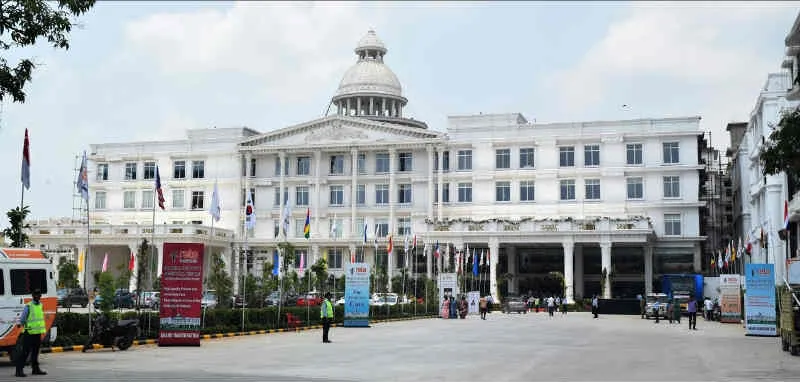
India hosts 57–61 JCI-accredited hospitals — the exact same international standard used to certify hospitals in the United States. JCI conducts rigorous on-site evaluations covering over 1,000 measurable standards. You can verify any hospital's JCI accreditation independently at jointcommissioninternational.org before booking.
JCI-accredited: Medanta, Fortis, Max, Apollo, Kokilaben and more
Many specialist surgeons at top Indian hospitals completed postgraduate fellowships at Johns Hopkins, the Cleveland Clinic, Royal College of Surgeons, and leading German universities. Their credentials are internationally verifiable. Sultan GHC shares complete specialist profiles — training, volumes, subspecialty — before you commit.
Fellowship-trained: cardiac, neuro, ortho, oncology and more
English is the primary language of medical practice at every major private hospital in India. Consultations, consent forms, discharge summaries, operative notes, and medical reports are all in English. There is no language barrier in the hospitals Sultan GHC partners with — and our coordinators are on hand throughout your stay.
English-speaking care at all Sultan GHC partner hospitals
Partner hospitals use the same diagnostic and surgical equipment found in leading American medical centers — da Vinci robotic surgery systems, high-field MRI and 4D CT, PET-CT, CyberKnife radiosurgery, and implants from Medtronic, DePuy, Stryker, and Abbott. India imports medical devices from the same U.S. and European manufacturers supplying American hospitals.
da Vinci, Varian, Medtronic, Stryker — same as U.S.
India's top cardiac centers report surgical mortality rates for bypass surgery comparable to leading U.S. centers. Apollo Hospitals has published peer-reviewed cardiac outcomes data. JCI accreditation requires hospitals to track and benchmark patient outcomes. These are not simply affordable hospitals — they are high-volume, internationally audited centers that do some procedures more frequently than most U.S. hospitals.
Peer-reviewed outcomes published by major Indian hospital groups
A patient from the UK reported receiving a next-day neurology consultation in India — with MRI and blood test results within an hour — after facing a year-long wait at home. American patients with complex conditions regularly wait 3–6 months for specialist appointments in the U.S. In India, most patients go from enquiry to hospital in under 4 weeks.
Source: Medical Buyer, July 2026
India’s medical expertise is not concentrated in one place. Each major city has a distinct specialty cluster — and Sultan GHC matches your condition to the right city and hospital, not just any available bed.
Cardiac, Neurosurgery & Transplant Hub
The National Capital Region is home to India's most concentrated cluster of super-specialty hospitals. Delhi NCR is particularly renowned for complex cardiac surgery, neurosurgery, organ transplantation, and oncology — with the highest density of U.S. and UK-trained specialists in the country.
Key Specialties
Featured Hospitals
Medanta, Fortis Gurgaon, Max Super Speciality, BLK-Max, Sir Ganga Ram
Oncology, Liver Care & Orthopaedics
India's financial capital houses some of its most prestigious hospitals. Mumbai is a destination of choice for oncology (including Tata Memorial — one of Asia's largest cancer centers), hepatology and liver surgery, orthopaedic procedures, and complex minimally invasive surgery.
Key Specialties
Featured Hospitals
Kokilaben Dhirubhai Ambani, Hinduja, Lilavati, Tata Memorial, Jaslok
Cardiac Surgery, Spine & ENT
Often called India's "health capital," Chennai attracts a significant share of India's international patients. The city is globally recognized for cardiac care, spine surgery, renal transplants, and ENT — with Apollo Chennai being one of the most visited hospitals by medical tourists in all of Asia.
Key Specialties
Featured Hospitals
Apollo Hospitals Chennai, Rela Institute & Medical Centre, MGM Healthcare, MIOT International, Fortis Malar
Oncology, Fertility & Robotic Surgery
India's technology capital applies the same innovation mindset to healthcare. Bengaluru is a leading destination for oncology, fertility and IVF, robotic and minimally invasive procedures, and paediatric care — with hospitals that attract high-calibre specialists who blend clinical expertise with cutting-edge technology.
Key Specialties
Featured Hospitals
Manipal Hospitals, Narayana Health, Columbia Asia, Aster CMI
Bariatric, Robotic & Nephrology
Hyderabad has rapidly grown into one of India's leading medical hubs, particularly for bariatric and metabolic surgery, robotic-assisted procedures, nephrology, and ophthalmology. Its hospitals consistently rank among India's best for patient experience and international patient services.
Key Specialties
Featured Hospitals
KIMS Hospitals, Yashoda Hospitals, Apollo Hyderabad, AIG Hospitals
These are representative cost ranges at JCI-accredited hospitals in India. Your Sultan GHC estimate will be procedure-specific, itemised, and provided in writing before you commit.
Cardiac Bypass Surgery
$100,000 – $130,000
$6,500 – $9,000
Save ~93%
Heart Valve Replacement
$150,000 – $200,000
$8,000 – $12,000
Save ~94%
Knee Replacement (Single)
$35,000 – $50,000
$5,500 – $7,500
Save ~85%
Hip Replacement
$35,000 – $45,000
$6,000 – $8,500
Save ~82%
Spinal Fusion Surgery
$60,000 – $150,000
$7,000 – $12,000
Save ~90%
Bone Marrow Transplant
$200,000 – $300,000
$22,000 – $35,000
Save ~89%
Liver Transplant
$250,000 – $400,000
$30,000 – $45,000
Save ~88%
IVF Treatment (Per Cycle)
$12,000 – $20,000
$2,500 – $4,500
Save ~80%
LASIK Eye Surgery (Both Eyes)
$4,000 – $6,000
$700 – $1,200
Save ~82%
Full Mouth Dental Implants
$30,000 – $50,000
$4,000 – $7,000
Save ~86%
Cost ranges are indicative. Actual costs depend on hospital, surgeon, procedure complexity, and length of stay. Sultan GHC provides a written, itemised estimate before any commitment. Sources: Research & Markets (Jan 2025), Medical Buyer (Jul 2026), Future Market Insights (2026).
The section most destination guides skip. Flights, visas, language, food, weather, and safety — answered plainly for American patients.
U.S. East Coast to Delhi/Mumbai: 14–16 hours, typically one stop via London, Paris, Frankfurt, Dubai, Doha, Kuwait, Jeddah, or Istanbul
U.S. West Coast to Delhi/Mumbai: 15–17 hours — nonstop available on Air India and United
Airlines: American, Air India, Air France, British Airways, Emirates, Etihad, Lufthansa, Qatar, Saudi, Turkish, and United Airlines
Typical total travel time: 16–22 hours. Best practice: book flexible-date tickets; Sultan GHC helps plan your complete travel itinerary
U.S. passport holders require an Indian Medical e-Visa (e-MED) — available online at indianvisaonline.gov.in
Requires a letter from the treating JCI-accredited hospital — Sultan GHC obtains this for you
India offers Medical e-Visas to citizens of 172 countries
A companion may travel on a Medical Attendant e-Visa
e-Visa is typically approved within 24–72 hours
English is an official language of India and the primary language of medical practice
Consultations, consent forms, discharge summaries — all in English at partner hospitals
India has approximately 125 million English speakers — the second-largest English-speaking population in the world
Sultan GHC's coordinators are English-speaking at all points of contact
October to March: cool, dry season — ideal for patients undergoing surgery and recovery
November to February: best weather in Delhi and North India
December to February: ideal for Chennai, Mumbai, and South India
Avoid June to September (monsoon season) for longer hospital stays if possible
All Sultan GHC partner hospitals offer international menus — not only Indian cuisine
Dietary requirements (vegetarian, halal, low-sodium, diabetic) are accommodated on request
Soft foods and post-surgical dietary plans are managed by hospital nutritionists
Western-style coffee shops, pharmacies, and convenience stores are available in or near every partner hospital
Major Indian cities (Delhi, Mumbai, Chennai, Hyderabad, Bengaluru) are safe for medical travelers
Sultan GHC arranges private airport pickup, hospital transfers, and ground transport throughout
Partner hospitals operate in well-established, internationally serviced urban areas
Comprehensive travel insurance including medical evacuation coverage is strongly recommended
Government of India Initiative
The Indian government has launched the “Heal in India” initiative — a national strategy to promote India as a premium international healthcare destination. It includes improved hospital infrastructure investment, streamlined Medical e-Visa processes (now available for citizens of 172 countries), a centralized international patient portal, and public-private partnerships with India’s leading hospital groups. This is not an emerging trend — it is national policy backed by institutional commitment.
For broader medical tourism questions, visit our full FAQ page.
Yes. India hosts 57–61 JCI-accredited hospitals — the same international quality standard used to accredit leading U.S. hospitals. Specialist surgeons hold fellowship credentials from the U.S., UK, and Germany. Sultan GHC partners only with internationally accredited hospitals that meet rigorous quality and safety criteria. You can independently verify JCI accreditation at jointcommissioninternational.org.
A cardiac bypass surgery that costs $100,000–$130,000 in the United States typically costs $6,500–$9,000 at a JCI-accredited hospital in India — a saving of approximately 90%. The same surgical discipline, implant brands (Medtronic, Abbott, Boston Scientific), and post-operative ICU standards apply. Even after flights and accommodation, patients save tens of thousands of dollars.
Yes. U.S. passport holders need an Indian Medical e-Visa (e-MED), available online at indianvisaonline.gov.in. It requires an invitation letter from your treating JCI-accredited hospital — which Sultan GHC obtains on your behalf. India offers Medical e-Visas to 172 countries. A travel companion can apply for a Medical Attendant e-Visa. Approval typically takes 24–72 hours.
English is the primary language of medical practice at every major private hospital in India. Consultations, consent forms, discharge summaries, operative notes, and medical reports are all in English. India has the second-largest English-speaking population in the world. Sultan GHC also provides English-speaking coordinators on the ground throughout your stay.
India received 507,000 international patients for medical treatment in 2025, up from 112,000 in 2009 — a 4.5-fold increase in 16 years (Medical Buyer, July 2026). The Government of India recorded 644,387 foreign medical tourist arrivals in 2024 (IBEF). India's medical tourism market is valued at $20.4 billion in 2026 and projected to reach $65.1 billion by 2036.
October through March is the recommended travel window for international patients. This covers India's cool, dry winter season — comfortable temperatures, minimal rainfall, and more comfortable recovery conditions. November to February is ideal for Delhi and North India. December to February suits Chennai, Hyderabad, and Mumbai best. Avoid June to September (monsoon season) for longer stays if possible.
Everything you need before making your decision.
Submit your medical reports today. Within 24 hours, you will receive a free specialist opinion, matched hospital recommendation in India, and a transparent cost estimate. No commitment. No obligation.
Free first opinion · Response in 24 hours · No obligation · JCI-accredited hospitals only